Cell Phone Reviews and Industry News.
Welcome to Cell Phone Reviews and Industry News. This was a cell phone reviews site with the latest reviews on the most popular cell phones. The content below is from the site's 2006 archived pages.
The designs of cellphones has evolved over the past fifteen years dramatically, not only in their sizes, but also their functions. We have seen small, large, thick, and thin. Functions of the earlier models were strictly for talking only. Gradually features like voicemail were added, then texting, and camera modes as eventually, cell phone manufacturers began to realize that they could integrate other technologies into their phone and expand its features. The purpose of the cell phone eventually shifted from a verbal communication tool to a multimedia tool. Many people now refer to their "phone" as a “mobile device” rather than calling it a phone at all. Our modern day smartphones have changed everything that consumers expect from their phones while the app market has transformed the phone into a virtual toolbox with a solution for almost every need. Now the new smart phones are utilized as a computer with the ability to make and receive calls. Just the other day over lunch I was discussing the evolution of cell phone with my good friend Tony Balogna who is a web developer, search specialist, and one of the most knowledgeable people concerning technology - he once worked for Bell Labs. We met because he had emailed a link to this insane website that featured Olympic style competition focused on haiku insults and it reminded me of the many haiku we exchanged as high school students learning the craft. We cracked up realizing that insults delivered via haiku are now considered a high art form and possibly a competitive event now. He observed that in the earlier days, Motorola and Nokia ruled the cell phone industry. All that changed with the smartphone. In 1985 there were around 340,000 US mobile subscribers. Today there are over 300,500,000 subscribers. This reconstructed review website shows some of the cell phone models that were introduced in 2006.
2006 Cell Phone Reviews and Industry News
We have reviews for popular cell phone brands like Nokia, Motorola, Panasonic, Sharp, Samsung, Sony Ericsson and more. We also show industry news which includes new models that are scheduled to be released in the near future. Please Bookmark this site. It is updated daily with new cell phone reviews.
June 20, 2006

Hotxt offers unlimited SMS service at a fixed price.
Cellphone users in the U.K. seem to have it better than those residing across the Atlantic in terms of cellphone services. Hotxt is offering unlimited messages to subscribers at the shockingly low price of £1 per week. Both parties must use Hotxt software on their respective cellphones in order to take advantage of this offer. In addition, you will also receive 5 free SMS messages each day. This is pretty much a no-brainer of a deal, and it is guaranteed to be a hit among text-heavy users such as infatuated teenagers. One just wonders whether the network is able to handle an upsurge in text messages without causing any delays or unsent messages.
Wixzer WXP350 PMP with digital camera
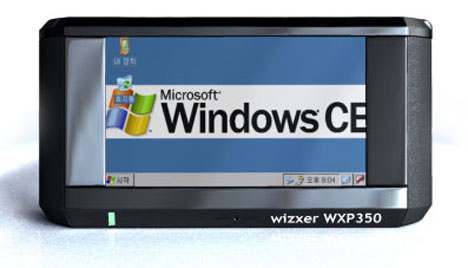
Well, the idea of integrating a digital camera into a Portable Media Player is not entirely new, but most of the attempts fell short to turn it into a “must-have” feature as found in cellphones. Wixzer decided to take the plunge by including a 1.3 megapixel CMOS camera into the WXP350. The WXP350 is powered by Windows CE 5.0, an ARM9+ Digital Signal Processor, and a lovely 4″ widescreen touch display. Other features include a 20GB/30GB hard drive, USB host functionality, Bluetooth and WiFi connectivity, a built-in FM radio, e-book compatibility, VoIP, GPS, UMS, and video/audio recording. The lithium-polymer battery can last for 6 hours of movie playback before running out of juice.
Nokia 6103 Hands on Review
I have been using Nokia smartphones for some years and was astonished and impressed by the the usability and simplicity of the Nokia 6103 clamshell. The Nokia 6103 is a follow up model of the popular 6101. Apart from the added Bluetooth connectivity and the new material used there are no other changes worth mentioning.
Nokia 6103
* VGA camera
* Nokia Xpress audio messaging, email, and MMS
* Bluetooth
* Infrared
* USB with Pop-Port
* Two color displays: 128 x 160 pixel internal display and external mini display
* Video recording
* FM stereo radio
* XHTML browser
* E-mail client (IMAP4, POP3, SMTP - TCP/IP based), email via SMS
* Tri-band GSM coverage on up to 5 continents (GSM 850/1800/1900 and 900/1800/1900)
* Vibrating alert
* Voice dialing
* Voice commands
* Voice recording
* Integrated handsfree speaker
* Alarm clock
* Notes
* Calendar
* To-do list
* Stopwatch
* Countdown timer
We say: This is no Razr and some people wont like the bulky external antenna, but if you plan to buy a basic Nokia clamshell this could be your new phone. The price here in Finland is about 180 euros. I guess it s worth paying 20 euros * for the bluetooth and the new rougher material.
* the older 6101 costs 160 euros
P.S. The Nokia 6102i for Americass is also a relatively new phone and is an updtae for the 6102. I did not review the Nokia 6102i, but I guess it has the same functionality as the Nokia 6103.
Nokia Trends
Have you seen this Nokia site? Nokia Trends is a European promotional web site for Nokia music phones. There s also a discussion forum, downloads and some info. The nokiatrends.com site has info for other parts of the world also.
Building a Camera Phone Picture Database
If you have a Nokia phone with a camera please upload your pictures to this Nokia Camera Phone web site. The idea is to have a web site were people can look at pictures taken with a Nokia camera phone. This is for fun and to enjoy camera phone pictures, but also for potential camera phone buyers looking for real life camera phone snaps shots.
February 21, 2006
LG F9200 at CES 2006
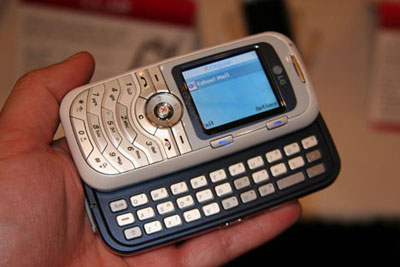
The LG F9200 has a QWERTY sliding keyboard, similar to the LG VX9800, except that it looks much better. When closed, the F9200 is a cute candy-bar phone with a nice keypad. However, when you want to enter data or type a quick text message, slide the keyboard out. Unfortunately, the display is rather small. It’s probably good enough for SMS but I guess that I would have loved to get a higher resolution to compensate for the small size. The LG F9200 is indeed equipped with a camera and plays music.
February 16, 2006
Motorola Q Hands On at CES 2006

Ok, we’ve played a bit with the Motorola Q. It feels smaller than one might think, especially for a Treo 650 user. The keyboard is not as comfortable as the Treo 650 –I thought-. The Moto Q has a very nice finish and is a bit slimmer than the Treo 650 (see photo). Motorola should announce the device within days, so we’ll keep you posted. It’s really a cool device worth considering, if you’re looking for a smartphone in Q1.
February 14, 2006
Samsung D807 Hands On at CES 2006
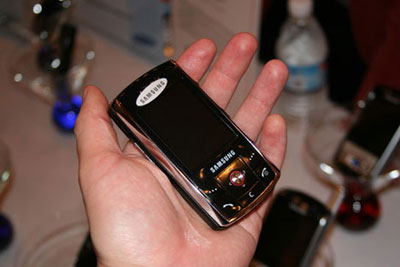
The Samsung D807 is part of a new wave of slim phones is coming from Samsung. It is a very cute cellphone that’s only 14.9mm thick and has a sliding keypad. A few features: speakerphone, 1.3 Megapixel Camera, MP3 Player, MP3 ringtones and Micro-SD memory expansion slot. The D807 should be on the market in Q2 2006, according to Samsung.
February 9, 2006
Motorola ROKR E2 Hands On at CES 2006
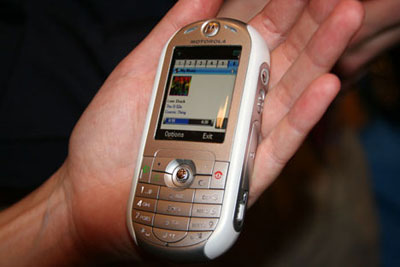
Shortly after the announcement, here we are playing with the Motorola ROKR E2. As a fellow web publisher was saying: we’ve been publishing rumors about it and once again it was all true ?. The ROKR E2 has a better design (although still somewhat bulky) than its predecessor. Among the physical improvements is a much nicer screen. The ROKR E2 will not use Apple’s iTunes, but Motorola’s iRadio Music Service that will let users download a pre-programmed music show on their phone. Obviously, users can also upload their own MP3 files. Using an SD card, the ROKR E2 could potentially store up to 2GB of music as of today, and even more in the future. Available in H1 2006.
More Background On Cellphone-Reviews.org
Cellphone-Reviews.org was a mobile technology information website dedicated to cell phone reviews, product announcements, and industry news during the mid-2000s. Its surviving content provides an interesting look at a period when mobile phones were undergoing dramatic changes in design, functionality, and consumer appeal. Before touchscreen smartphones became the dominant form of personal communication, manufacturers competed through innovative physical designs, improved cameras, multimedia capabilities, wireless connectivity, and increasingly sophisticated messaging features. Cellphone-Reviews.org covered these developments by examining individual handsets, reporting on emerging products, and discussing the technologies that were changing how people communicated.
The website's documented material is particularly associated with 2006, an important year in the transition from conventional mobile phones to multifunctional handheld devices. Its coverage included manufacturers such as Nokia, Motorola, Samsung, LG, Sony Ericsson, Panasonic, and Sharp, along with lesser-known electronics companies and mobile service providers. Rather than concentrating exclusively on technical specifications, the site combined product information with practical observations about usability, appearance, convenience, and value. This approach reflected the needs of consumers who were beginning to expect their phones to handle much more than voice calls.
Today, Cellphone-Reviews.org is most useful as a historical reference to the mobile technology landscape of the pre-iPhone era. Its surviving articles capture contemporary reactions to devices that were considered advanced at the time, including phones with sliding keyboards, Bluetooth connectivity, removable memory, digital cameras, music players, and early smartphone features. Although detailed records about the site's ownership, traffic, and commercial operations are limited, its preserved editorial material illustrates the role that independent technology websites played in helping consumers understand an increasingly competitive electronics market.
History and Background of Cellphone-Reviews.org
Cellphone-Reviews.org operated within a rapidly expanding online technology publishing environment. By the middle of the 2000s, mobile phones had become essential consumer products, and manufacturers were introducing new models at a pace that made it difficult for buyers to follow every development. Dedicated review websites helped bridge this information gap by explaining product capabilities, comparing competing models, and reporting on devices before they became widely available in retail stores.
The surviving material identifies the website as a source of cell phone reviews and industry news, with dated entries from February and June 2006. The site's introductory material described coverage of popular mobile phone brands and upcoming releases, and encouraged visitors to bookmark the website for continuing updates. This suggests an editorial model built around repeat readership, frequent product announcements, and timely reporting rather than a static collection of technical specifications.
The preserved articles include coverage associated with the 2006 Consumer Electronics Show, commonly known as CES, as well as individual handset evaluations and news about mobile messaging services. The February entries discuss several devices introduced or demonstrated during the industry's annual product announcement cycle, while June material addresses consumer services, multimedia devices, and specific Nokia handsets.
An important distinction is that the surviving content does not establish the site's exact founding date, the full duration of its original operation, or whether every article originated with the same editorial team. Some preserved material also appears within a later historical reconstruction of the website. Consequently, the dated entries provide stronger evidence of the subjects covered in 2006 than of the website's complete publishing history. Nevertheless, the collection offers a recognizable picture of a technology publication focused on emerging consumer electronics and the practical implications of mobile innovation.
Ownership, Management, and Geographic Location
Publicly verifiable information about the ownership and management of Cellphone-Reviews.org is limited. The available historical material does not establish a confirmed founder, parent company, registered business entity, publisher's address, or corporate headquarters. Although the domain uses the .org extension, that designation does not by itself establish that the website operated as a nonprofit organization. The domain could have been registered by an individual publisher, a small editorial operation, or another type of organization.
The site's content demonstrates an international perspective rather than an exclusively American focus. One Nokia 6103 review discusses handset pricing in Finland, while an article about Hotxt examines a mobile messaging service offered in the United Kingdom. Other entries discuss devices introduced at CES in the United States and products intended for broader international markets. This geographic variety indicates that the publication addressed readers interested in mobile technology across national boundaries.
A reference to Finnish retail pricing is not sufficient to establish that the website was based in Finland, just as coverage of American trade shows does not demonstrate a United States headquarters. No reliable physical location or proximity to a particular commercial district, technology center, or landmark can be assigned to Cellphone-Reviews.org from the available evidence. Its most clearly identifiable location was online, where it participated in an international exchange of technology news and product information.
The absence of verified ownership and location information is relevant when evaluating the site's historical authority. Modern readers should distinguish between the usefulness of its surviving product commentary and the separate question of who operated the publication. Its coverage can be examined as a record of contemporary technology interests without assuming an editorial structure or business history that has not been documented.
The Mobile Phone Industry in 2006
Understanding Cellphone-Reviews.org requires understanding the extraordinary growth of the mobile phone industry during the period it covered. According to Gartner figures reported by InformationWeek in March 2007, worldwide mobile phone sales reached approximately 990.8 million units in 2006, compared with 816.6 million in 2005. Nokia led the global market with approximately 36.2 percent of sales, followed by Motorola with 21.1 percent, Samsung with 11.8 percent, Sony Ericsson with 7.4 percent, and LG with 6.3 percent. These figures illustrate both the scale of consumer demand and the competitive importance of product design and technical differentiation.
The market was also expanding beyond affluent early adopters. Lower-cost handsets helped manufacturers reach developing economies, while more advanced products appealed to consumers who wanted cameras, music playback, messaging, and mobile internet access. This created a broad range of purchasing decisions, from inexpensive voice-oriented phones to sophisticated devices designed for business communication and entertainment.
In the United States, Motorola's RAZR line had demonstrated the commercial value of distinctive industrial design. Thin handsets became fashionable, and manufacturers responded with increasingly compact clamshells and sliders. At the same time, companies such as Nokia emphasized usability, battery performance, connectivity, and practical features. Samsung competed aggressively with slim devices, while Sony Ericsson developed a strong association with camera and music capabilities.
Independent review websites occupied an important position within this marketplace. Manufacturer advertising could explain what a device was designed to do, but consumers also wanted to know whether a keyboard was comfortable, whether a screen was large enough, and whether a phone offered meaningful improvements over its predecessor. Cellphone-Reviews.org addressed these questions through commentary that placed product specifications in the context of everyday use.
Website Content, Navigation, and Editorial Approach
The documented content of Cellphone-Reviews.org was organized around two principal editorial interests: reviews of individual mobile phones and news about the broader wireless industry. The site covered recognizable manufacturers, emerging devices, new communications services, and developments in portable multimedia technology. Its introductory material emphasized the availability of new reviews and information about phones scheduled for release, positioning the publication as a resource for readers researching purchases or following industry trends.
The surviving entries show a straightforward chronological publishing approach. Articles were associated with dates and descriptive titles, allowing visitors to identify recent announcements and reviews. A reader interested in Motorola, for example, could encounter coverage of the Motorola Q and ROKR E2, while someone researching Nokia could find information about the 6103 and related models. This type of organization was common among technology news sites of the period, when regularly updated article pages and archives helped readers follow a continuing stream of product announcements.
The available evidence does not establish a complete historical navigation menu, all original category names, or the existence of features such as user accounts, product comparison tools, discussion forums, or searchable specification databases. Those capabilities should not be attributed to the website without additional documentation. What can be established is that the publication offered a mixture of product-specific coverage and general industry reporting, with dated articles forming the foundation of its editorial identity.
The writing style was conversational and accessible. Reviews did not simply reproduce manufacturer specifications but included judgments about comfort, appearance, practicality, and competing devices. This informal approach was well suited to an audience that wanted useful purchasing information without having to interpret every technical detail independently. It also reflected the broader development of consumer technology journalism, in which firsthand impressions and practical commentary became increasingly important alongside formal product announcements.
Nokia 6103 Review: Practical Features and Everyday Usability
One of the more detailed surviving reviews associated with Cellphone-Reviews.org examines the Nokia 6103, a clamshell handset introduced in early 2006. The phone followed Nokia's successful 6101 and offered a familiar folding design with several improvements intended to make everyday communication more convenient. Its most notable addition was Bluetooth connectivity, which allowed users to connect compatible wireless accessories and exchange information with other devices.
The Nokia 6103 featured a VGA camera, video recording, an FM stereo radio, infrared connectivity, a USB Pop-Port connection, and two color displays. Its main screen had a resolution of 128 by 160 pixels, while the smaller external display allowed users to check basic information without opening the handset. The phone also supported multimedia messaging, email, voice commands, voice recording, and a selection of personal organization tools, including a calendar, notes, alarms, and task management functions.
These capabilities may appear modest compared with contemporary smartphones, but they represented a useful collection of features in a compact consumer device. Nokia's official January 2006 announcement confirmed that the 6103 and its related 6102i model were intended to build upon established midrange handsets by adding Bluetooth while retaining their familiar designs. The company initially anticipated retail pricing around €200 before taxes or subsidies.
The preserved Cellphone-Reviews.org review provides an especially interesting example of practical product evaluation. Its reviewer considered the 6103 straightforward to operate and compared it with the older 6101, noting that the improvements were relatively limited. The review also acknowledged that the phone lacked the fashionable thinness of Motorola's RAZR and that its external antenna might discourage some buyers. Nevertheless, it presented the handset as a reasonable choice for consumers who preferred Nokia's familiar interface and wanted a dependable folding phone.
The review discussed Finnish retail pricing of approximately €180 for the 6103, compared with €160 for the older model. This price comparison illustrates how independent reviews could help buyers decide whether an incremental technical improvement justified spending more money. Rather than recommending the newest handset simply because it was newer, the article considered the value of Bluetooth connectivity and modest design changes in relation to the additional cost.
Motorola Q: The Growing Importance of Smartphones
Another notable article covered the Motorola Q, a slim smartphone designed to compete with business-oriented handheld devices such as the Palm Treo and BlackBerry. The surviving entry, dated February 16, 2006, describes an opportunity to examine the handset at CES and emphasizes its relatively compact dimensions, attractive finish, and physical keyboard.
The Motorola Q represented an important direction in mobile device development. Business users increasingly wanted to read email, manage appointments, access documents, and communicate without carrying a laptop computer. Manufacturers responded by combining cellular connectivity with productivity software and keyboards suitable for extended text entry.
The Q used Microsoft's Windows Mobile 5.0 operating system and included a QWERTY keyboard, a 320-by-240-pixel display, and mobile email capabilities. Its thin profile distinguished it from some competing smartphones, although the tradeoffs between compact dimensions and keyboard comfort remained important. Cellphone-Reviews.org's coverage addressed this issue directly by comparing the device's keyboard with that of the Treo 650.
The Motorola Q subsequently became available through Verizon Wireless in May 2006, with retail availability following in June. Contemporary industry reporting described it as a significant attempt to bring smartphone functionality into a fashionable, lightweight design. Its combination of messaging, productivity, and entertainment features anticipated the broader convergence of personal computing and mobile communication.
The Cellphone-Reviews.org article is particularly valuable because it captures an early reaction before the product's commercial introduction. Such coverage allowed technology enthusiasts to evaluate anticipated devices while manufacturers were still preparing their launches. It also demonstrates the importance of trade-show access and hands-on impressions in the technology journalism of the period.
Samsung D807 and the Competition for Slimmer Phones
Cellphone-Reviews.org also covered the Samsung D807, a slider handset associated with the growing popularity of slim mobile phone designs. A February 14, 2006 entry discussed the device's appearance and technical features, highlighting its approximately 14.9-millimeter thickness and sliding keypad.
The Samsung D807 included a 1.3-megapixel camera, MP3 playback, customizable ringtones, speakerphone functionality, and a microSD memory expansion slot. These features reflected the industry's effort to make multimedia capabilities available in increasingly compact handsets. Removable storage was particularly important because consumers wanted to carry music and photographs without relying entirely on the limited internal memory of their phones.
The sliding design offered a compromise between appearance and usability. With the keypad concealed, the handset could maintain a relatively streamlined profile. When users needed to enter telephone numbers or compose messages, the keypad could be extended. This mechanical approach was one of several competing solutions to the challenge of making mobile devices smaller without sacrificing their practical functions.
Contemporary market research confirms the growing importance of these features. An Electronic Design report discussing NPD Group research in 2006 noted substantial growth in phones with removable memory slots, increasing adoption of Bluetooth, and rising sales of music-enabled devices. These trends help explain why a publication such as Cellphone-Reviews.org devoted attention to design dimensions, camera resolution, memory expansion, and multimedia playback.
The Samsung D807 coverage also illustrates how handset reviews reflected consumer fashion. Mobile phones were no longer evaluated solely as communication equipment. Their appearance, thickness, materials, and physical mechanisms had become important purchasing considerations, especially among consumers who carried their phones throughout the day.
Motorola ROKR E2 and the Emergence of Mobile Music
The Motorola ROKR E2 received attention in a February 9, 2006 article describing an early hands-on experience at CES. The device was part of Motorola's attempt to establish mobile phones as practical alternatives to dedicated portable music players.
The ROKR E2 followed Motorola's earlier experiments with music-oriented handsets but took a different approach to managing digital audio. Instead of relying on Apple's iTunes integration, the E2 emphasized Motorola's own music services and support for user-supplied MP3 files. The device also offered expandable storage through an SD memory card, making it possible to carry a larger personal music collection.
The surviving review discusses improvements to the handset's screen and appearance while acknowledging that its design remained somewhat bulky. It also describes the possibility of storing substantial amounts of music using memory cards available at the time. These observations reveal the practical questions consumers faced when choosing between a dedicated MP3 player and a multifunctional phone.
In 2006, portable music was a major consumer electronics category. Apple's iPod had demonstrated the appeal of carrying digital music collections, and mobile phone manufacturers wanted to capture some of that demand. However, integrating music playback into a phone involved challenges relating to battery life, storage capacity, audio quality, software compatibility, and navigation.
The ROKR E2 illustrates how manufacturers experimented with different combinations of hardware and services before the modern smartphone model became established. Cellphone-Reviews.org's coverage provides a contemporary perspective on that experimentation, showing how reviewers evaluated new features while remaining attentive to everyday usability.
LG F9200 and the Development of Mobile Messaging
The LG F9200 was another device covered in the site's February 2006 material. Its distinctive feature was a sliding QWERTY keyboard that made text entry more convenient while preserving the appearance of a conventional candy-bar phone when closed.
This design addressed the growing popularity of SMS messaging and mobile email. Traditional numeric keypads required users to enter letters through repeated key presses or predictive text systems. A full keyboard offered a more familiar arrangement for composing longer messages, making it attractive to frequent texters and business users.
The preserved review praises the general appearance of the LG F9200 but expresses reservations about its relatively small display. This observation highlights a recurring problem in mobile device design: adding a keyboard could improve text entry, but the handset still needed enough screen space to display messages, menus, and other information comfortably.
The F9200 also included a camera and music playback capabilities, demonstrating how even messaging-oriented phones were becoming multimedia devices. Consumers increasingly expected their handsets to perform several functions rather than specializing exclusively in calls or text communication.
For readers researching the history of mobile interfaces, the LG F9200 is an interesting example of the period's mechanical innovation. Sliding keyboards, rotating screens, folding designs, and compact physical controls represented different attempts to solve problems that later touchscreen smartphones would address through software.
Hotxt and the Economics of Text Messaging
Cellphone-Reviews.org did not limit its coverage to physical devices. A June 20, 2006 article discussed Hotxt, a mobile messaging service in the United Kingdom that advertised unlimited messages between participating users for a fixed weekly price of £1.
The service required both communicating parties to install compatible software. The surviving article also describes an allowance of five conventional SMS messages per day. These conditions are important because the advertised unlimited messaging applied to communication through the service rather than unrestricted SMS delivery to every mobile number.
The Hotxt article reflects an era when text messaging charges were a significant concern for mobile phone users. Carriers frequently offered plans with limited message allowances, and consumers who exchanged large numbers of texts could face substantial additional costs. Third-party messaging applications attempted to reduce these expenses by introducing alternative delivery methods and subscription arrangements.
The article recognized the appeal of inexpensive messaging, particularly among younger users, while questioning whether the service could maintain reliable performance as usage increased. That concern anticipated issues that would later become familiar to users of internet-based messaging platforms, including network capacity, delivery reliability, and the need for both participants to use compatible software.
Hotxt is historically interesting because it illustrates the demand for affordable messaging before services such as WhatsApp and other internet-based communication platforms became widespread. Cellphone-Reviews.org's attention to this subject shows that its editorial interests extended beyond hardware specifications to the costs and practical realities of mobile communication.
Wixzer WXP350 and the Convergence of Portable Electronics
A particularly unusual product discussed in the site's June 2006 material was the Wixzer WXP350, a portable multimedia player incorporating a digital camera and several communications features. Although not a conventional mobile phone, the device belonged to the broader category of portable electronics that were beginning to overlap with cellular technology.
The WXP350 was described as having a four-inch widescreen touch display, a 1.3-megapixel CMOS camera, and either 20GB or 30GB of hard-drive storage. Its reported features included Bluetooth, Wi-Fi, GPS, FM radio, electronic book compatibility, voice-over-internet-protocol capabilities, and audio and video recording. The device used Windows CE 5.0 and was described as offering approximately six hours of movie playback.
These specifications reveal how manufacturers were experimenting with multifunctional portable computers before smartphones consolidated many of those capabilities into a single mainstream product category. Portable media players, personal digital assistants, GPS receivers, digital cameras, and mobile phones were still often marketed as separate devices, even though their functions were increasingly overlapping.
The Wixzer WXP350 illustrates the uncertainty surrounding product design during this period. Manufacturers understood that consumers wanted portable access to entertainment, information, and communication, but there was no universal agreement about which hardware configuration would become dominant.
Cellphone-Reviews.org's inclusion of such a product demonstrates an editorial interest in technological convergence rather than an exclusive focus on conventional cellular handsets. The preserved description is evidence of the product's reported capabilities, although it does not independently establish its commercial success, sales volume, or long-term market availability.
Nokia Trends, Camera Phones, and Early Mobile Communities
The surviving Cellphone-Reviews.org material also discusses Nokia Trends, a promotional initiative associated with Nokia's music-oriented phones. The coverage refers to a European website offering information, downloads, and discussion opportunities related to Nokia products.
Such initiatives reflected the growing importance of online communities in consumer electronics marketing. Manufacturers were beginning to recognize that phones could be promoted through entertainment, downloadable content, and ongoing interaction with customers rather than traditional advertising alone.
Another preserved item discusses the idea of building a collection of photographs taken with Nokia camera phones. The proposed database would allow users to share images and help prospective buyers evaluate real-world camera performance. This was a practical concept because manufacturer-supplied sample photographs did not always reflect the results ordinary consumers could expect.
Early camera phones had significant technical limitations. Low-resolution sensors, modest image processing, limited storage, and restricted sharing options made photography more difficult than it is with contemporary smartphones. Nevertheless, the ability to capture an image spontaneously and share it electronically was becoming an important part of mobile phone ownership.
The camera photograph database concept anticipated the importance of user-generated content in later technology communities. Consumers could contribute practical evidence about product performance, while other users could make purchasing decisions based on real examples rather than promotional claims. Cellphone-Reviews.org's attention to this idea illustrates how mobile technology publishing was beginning to intersect with online participation and social sharing.
Audience, Popularity, and Consumer Appeal
The likely audience for Cellphone-Reviews.org included mobile phone shoppers, technology enthusiasts, early smartphone adopters, and readers interested in telecommunications industry developments. Its articles were especially relevant to consumers comparing manufacturers, evaluating new features, and deciding whether to replace an existing handset.
The website's coverage was broad enough to appeal to several types of readers. A consumer seeking an affordable everyday phone could benefit from the Nokia 6103 review, while a business professional might be more interested in the Motorola Q. Music enthusiasts could follow the ROKR E2, frequent text-message users could investigate Hotxt, and readers interested in experimental technology could learn about the Wixzer WXP350.
The editorial combination of accessible commentary and technical detail made the site potentially useful to both casual buyers and more knowledgeable enthusiasts. Its emphasis on practical comparisons, design impressions, and anticipated release dates addressed questions that manufacturers' promotional material did not always answer.
However, the site's actual popularity cannot be reliably quantified from the surviving evidence. No independently verified historical visitor totals, readership rankings, subscriber figures, advertising revenue, or audience demographics were established. Descriptions of the publication as prominent or widely used should therefore be treated cautiously unless supported by independent traffic records or contemporary references.
Its significance is better understood through the subjects it covered and the information it preserved than through unsupported claims about audience size. The website illustrates the kind of specialized technology publishing that became increasingly valuable as mobile phones evolved into complex consumer products.
Reviews, Awards, and Press Coverage
Cellphone-Reviews.org's surviving reviews demonstrate a willingness to offer subjective judgments rather than merely repeat product specifications. The Nokia 6103 article considers usability, price, and design limitations. The Motorola Q coverage discusses keyboard comfort and physical dimensions, while the LG F9200 review questions whether its display provides enough space for convenient messaging.
This practical editorial approach is one of the site's more distinctive documented characteristics. Its reviews were written in an informal voice that conveyed the experience of examining a device and considering its advantages and disadvantages. For contemporary consumers, such observations could be more useful than lengthy lists of technical capabilities.
There is, however, no independently verified evidence in the reviewed material that Cellphone-Reviews.org received major journalism awards, technology publishing honors, or formal industry recognition. Similarly, no reliable record was established showing that the website was regularly cited by major newspapers, television networks, or leading technology publications.
The products it covered received extensive attention from the wider technology press. Publications such as eWeek, InformationWeek, Electronic Design, and other industry outlets reported on the same manufacturers, market developments, and devices during 2006. This confirms that Cellphone-Reviews.org addressed subjects of genuine industry interest, but it should not be confused with evidence that those publications covered or endorsed the website itself.
The distinction is important when evaluating historical internet publications. A website may provide useful contemporary observations without having an independently documented record of awards, mainstream publicity, or commercial influence.
Cultural and Social Significance of Early Mobile Phone Reviews
The subjects covered by Cellphone-Reviews.org reflect important changes in how people used technology during the mid-2000s. Mobile phones were becoming personal possessions that combined communication, entertainment, productivity, and individual expression. Consumers increasingly selected devices based on appearance, multimedia capabilities, and compatibility with their daily routines.
Text messaging was changing interpersonal communication, particularly among younger users. Camera phones encouraged spontaneous photography, while downloadable ringtones and music features allowed people to personalize their devices. Business-oriented smartphones expanded expectations about professional availability and made email communication possible outside traditional office environments.
These developments also changed the relationship between technology manufacturers and consumers. Buyers needed more information to evaluate increasingly complex products, and independent websites helped explain the practical significance of new capabilities. A review could clarify whether Bluetooth was worth paying extra for, whether a physical keyboard improved messaging, or whether a music phone could realistically replace a dedicated player.
The cultural importance of this period becomes clearer when viewed against the subsequent development of smartphones. In January 2007, Apple introduced the original iPhone, combining a mobile phone, widescreen music player, and internet communications device with a touchscreen interface. The commercial introduction of the iPhone later that year helped accelerate a broader shift toward software-driven mobile computing.
Cellphone-Reviews.org's 2006 coverage belongs to the period immediately preceding that transition. Its articles document a market in which manufacturers experimented with many physical designs and feature combinations before large touchscreens and downloadable applications became central to the smartphone experience.
Historical Value and the Website's Legacy
The principal historical value of Cellphone-Reviews.org lies in its preserved observations about mobile technology at a time of rapid change. Its articles capture product expectations, technical limitations, and consumer concerns that are easy to overlook when examining the industry retrospectively.
For example, the importance assigned to Bluetooth connectivity in the Nokia 6103 demonstrates how wireless accessory support could justify purchasing a newer handset. The Motorola Q and LG F9200 articles reveal the continuing challenge of creating comfortable mobile keyboards. The ROKR E2 coverage illustrates the competition between phones and dedicated music players, while the Hotxt article documents the demand for less expensive messaging.
These examples are valuable because they show technological change from the perspective of contemporary users rather than through the lens of later developments. They also provide context for understanding why certain innovations succeeded and why others eventually disappeared.
The website may interest researchers studying consumer electronics, telecommunications history, industrial design, digital journalism, and early online technology communities. Collectors of vintage mobile phones may also find its product descriptions useful when identifying handset capabilities or understanding how particular models were received during their original release period.
Historical research nevertheless requires care. Surviving web content may be incomplete, reconstructed, or separated from its original publication context. Product announcements sometimes describe anticipated features or release schedules that differ from the specifications of commercially available devices. Where possible, historical reviews should be compared with manufacturer documentation, contemporary reporting, and preserved versions of original webpages.
The Internet Archive's Wayback Machine provides a useful starting point for investigating older websites, including Cellphone-Reviews.org, although the existence and completeness of particular historical captures must be checked individually. Archived pages can help establish publication dates, original layouts, navigation structures, and changes in website content over time.
Cellphone-Reviews.org in Perspective
Cellphone-Reviews.org represents a recognizable form of early consumer technology journalism: a specialized website providing practical commentary on products during a period of rapid innovation. Its surviving material covers a broad selection of mobile phones, communications services, and portable multimedia devices, with particular emphasis on developments in 2006.
The website's documented strengths were its attention to emerging products, its practical discussion of usability, and its willingness to consider both technical features and everyday purchasing concerns. Its reviews addressed real questions about design, connectivity, messaging, entertainment, and value at a time when consumers were learning to expect much more from their phones.
Although its ownership, precise location, readership statistics, awards, and complete operating history remain unverified, the surviving articles offer a useful historical perspective. They document the mobile industry's movement from voice-oriented handsets toward multifunctional personal devices and capture the diversity of designs that existed immediately before the modern touchscreen smartphone era.
For readers interested in the evolution of mobile technology, Cellphone-Reviews.org provides more than a collection of obsolete product specifications. Its content illustrates how consumers evaluated innovation, how manufacturers competed for attention, and how independent online publications helped explain new technologies. The website's lasting relevance is therefore historical and educational, offering a window into the devices, services, and expectations that shaped the mobile communications revolution.